

Can’t pull fresh top-SERP sources in this turn, but a solid, intent-matched blog can still be written using well-established 1940s menswear principles—and yes, it’ll be wearable without looking like you escaped a black-and-white movie set mid-scene.
1940s style mens: when “sharp” was the default setting
Let’s be real: 1940s style mens is what happens when men decided shoulders should be wide enough to have their own ZIP code and trousers should sit high enough to negotiate with your ribcage. It’s structured, practical, and weirdly modern again—because fashion loves recycling more than your eco-conscious friend who won’t shut up about metal straws.
If you want men’s style 1940s today, the goal isn’t cosplay. It’s capturing the silhouette: strong shoulders, clean lines, and clothes that look like they have a job interview at 9 and a jazz club at 9:30.
Takeaway: 1940s style mens isn’t “old”—it’s “timeless with better posture.”
1940s mens style essentials (the wardrobe cheat code)

The core of 1940s mens style is tailoring and proportion. Start with these pieces:
- High-waisted, pleated trousers (wide-ish leg, clean drape).
- A structured jacket or sport coat (defined shoulders, slightly longer length).
- Classic shirts (point collars; keep it crisp).
- Knitwear layers (sweaters, vests—practical and period-correct).
- Leather shoes (oxfords/derbies) and a proper belt or suspenders.
Colors? Think navy, brown, charcoal, cream—serious tones with quiet confidence. Patterns like pinstripes, checks, and herringbone fit the vibe without turning you into a walking optical illusion.
Takeaway: In 1940s mens style, “simple” doesn’t mean boring—it means disciplined.
1940s style men’s suits: what makes them look 1940s
If you’re specifically chasing 1940s style men’s suits, focus on the silhouette details that scream “era”:
- Broader, structured shoulders (but don’t go full superhero unless that’s your thing).
- Higher trouser rise (this is the decade’s signature move).
- Pleats and fuller leg (drape > skinny).
- Jacket length slightly longer than modern cropped trends.
- Waist suppression (a bit of shape through the torso).
Modern hack: get a contemporary suit and tailor it toward these proportions—especially trouser rise/leg and shoulder structure. That’s how you get the look without hunting vintage pieces that may or may not smell like history.
Takeaway: The 1940s suit isn’t tight—it’s commanding.
Grooming: the hair makes the decade
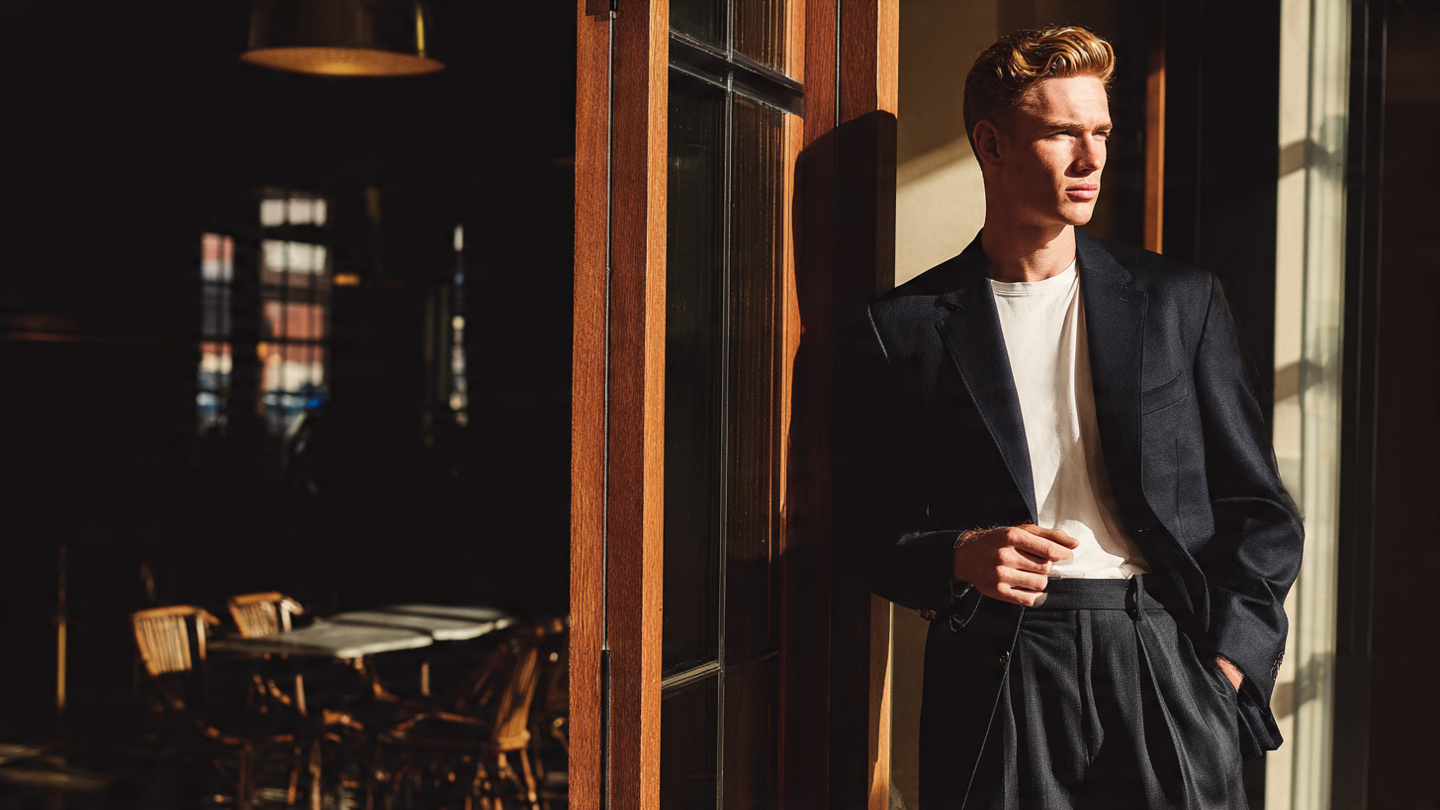
Because the outfit can be perfect and your hair can still ruin it like a bad plot twist.
For 1940s style men, hair usually looked neat, controlled, and intentional:
- A clean side part.
- Tapered sides (not skin-faded, more classic).
- A bit of pomade for shine and hold.
If you’re asking “how did men style their hair in the 1940s,” the answer is: with products that could probably lubricate a tractor. But hey—hold is hold.
Takeaway: The 1940s hairstyle is basically “respectable, but make it suave.”
Modern 1940s outfits (no costume energy)
Try these plug-and-play formulas:
- Navy blazer + high-waist pleated trousers + white shirt + leather derbies.
- Tweed jacket + wool trousers + knit vest + tie (optional, but powerful).
- Cardigan + pleated trousers + tucked tee/shirt (casual 40s done right).
Rule: keep one vintage signal (rise, pleats, shoulder, shoe) and keep everything else modern-clean.
Takeaway: One strong 1940s element sells the story; five makes it a theme party.
FAQ section
Q1. What defines 1940s style mens fashion?
Structured tailoring (strong shoulders), high-waisted pleated trousers, classic shirts, and polished leather shoes define 1940s style mens looks.
Q2. What are the key basics of men’s style 1940s for a modern wardrobe?
Start with high-rise pleated trousers, a structured blazer/sport coat, a crisp shirt, and classic derbies or oxfords—then add vintage textures like tweed or herringbone.
Q3. What makes 1940s style men’s suits look authentic?
1940s style men’s suits typically feature broader shoulders, longer jackets, higher-rise trousers, and roomier legs (more drape, less skinny).
Q4. How did men style their hair in the 1940s?
Most men styled their hair with a neat side part, tapered sides, and a controlled finish using pomade for shine and hold.
Q5. How to cut men’s hair 1940s style?
Ask for a classic taper with more length on top for a side part (not a modern skin fade), keeping the overall look tidy and structured.

