

If 90s fashion were a streaming show, it’d be 10 seasons long, zero fillers, and every outfit would have “iconic” energy… plus one questionable hat that nobody claims responsibility for. Now let’s bake your exact keywords into the blog like they’re the secret sauce (because, yes, this will be on the test).
1990s fashion: what it really looked like
1990s fashion wasn’t one neat trend—it was a whole mood board with commitment issues. One day it was minimalist clean-girl-before-clean-girl, the next day it was full grunge “I thrifted this and I’m emotionally unavailable,” and somehow both were valid. When people say 1990 s fashion, they’re usually talking about a mix of comfort, attitude, and silhouettes that didn’t beg for attention… they assumed it.
The big idea: the decade dressed for real life—school, malls, concerts, bad dates, and better breakups. That’s why the pieces still work today: they were built for movement, not just mirrors.
Takeaway: 1990s fashion is the blueprint for “effortless” (even when it took effort).
90s TV and Movie Influence: Style Icons Everywhere
If you wanted a crash course in 90s style, all you had to do was turn on your TV or hit the theater. The decade served up a buffet of wardrobe inspo, and everyone—whether they shopped mall racks or thrift bins—eyeballed the outfits on screen for their next “look.”
Television was basically ground zero for trendsetting. One week, sitcoms were rewriting the rules for minimalism and “haircut heard round the world” moments. The next, bold prints and neon were suddenly cool again, thanks to the most charismatic leads on primetime.
Meanwhile, movies were turning school halls and shopping trips into makeshift runways. Iconic characters made plaid skirts, knee socks, and logo hats less of a costume and more of a closet must-have. Studios didn’t just create storylines—they gifted a generation its everyday dress code.
In short: 90s shows and films didn’t just dress their cast—they dressed us all.
1990 style vs “trying too hard”
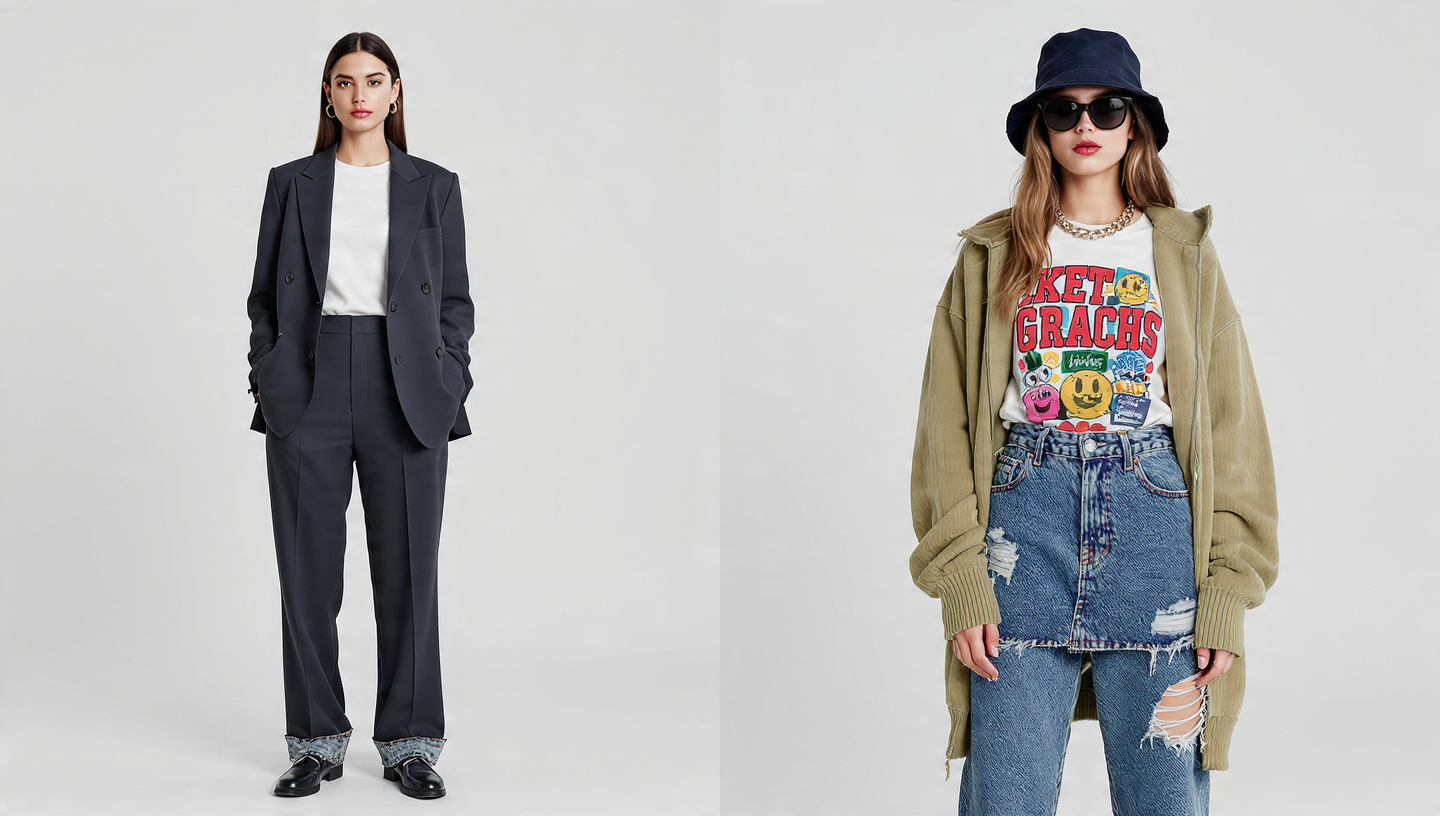
Let’s be real—1990 style is easy to mess up if you treat it like a costume. The goal isn’t to look like you time-traveled; it’s to borrow the DNA of the decade and remix it with modern fit.
The 90s were about:
- Simple base layers (tees, tanks, denim)
- One statement (jacket, shoe, accessory)
- A confident silhouette (straight, relaxed, or sleek)
If your outfit has five “throwback” items at once, you’re not doing 1990 style—you’re doing a museum exhibit.
Takeaway: One 90s element per outfit = cool. Five = Halloween.
1990’s style: the iconic “tribes”
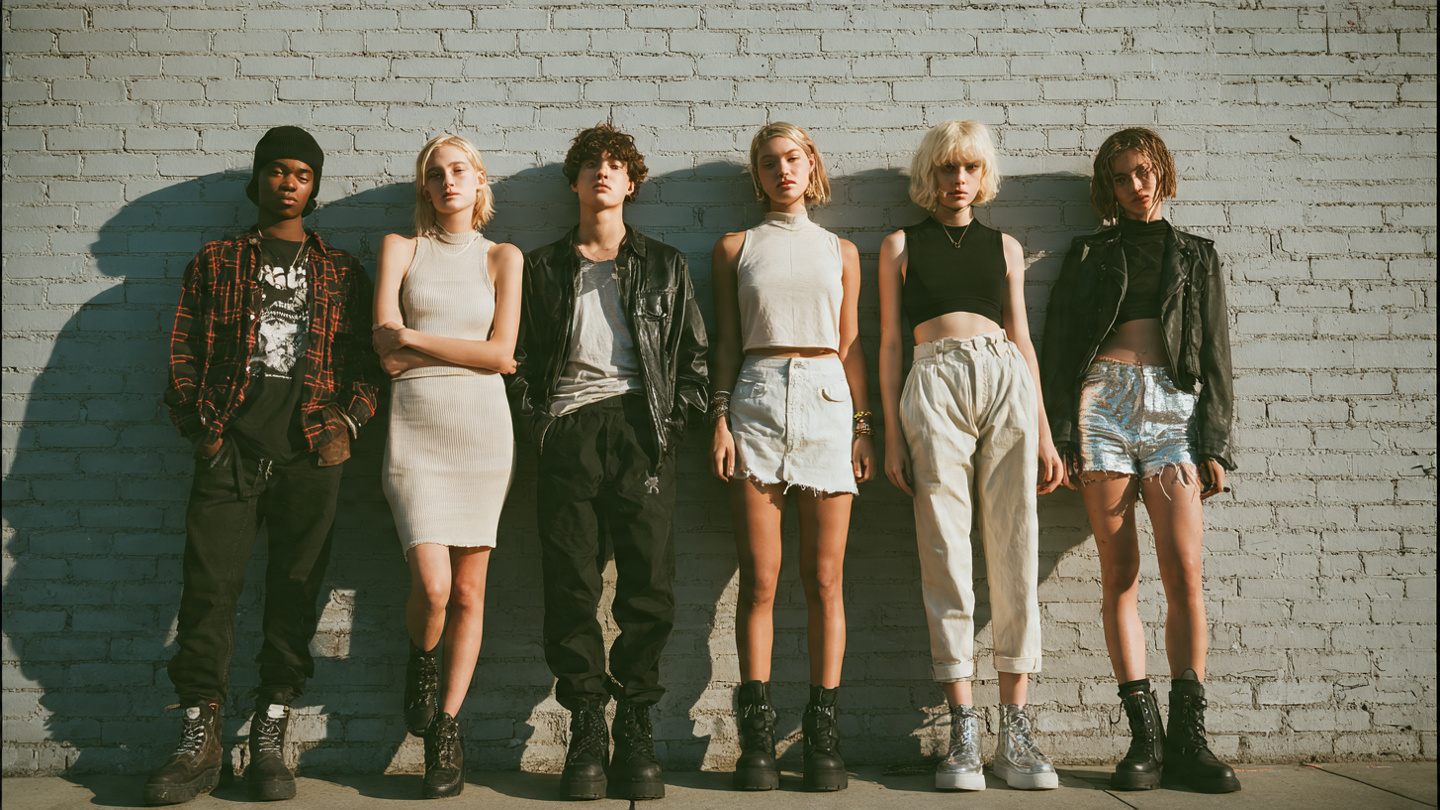
1990’s style wasn’t a single lane. It was multiple aesthetics co-existing like roommates who never share snacks.
Here are the major “tribes” that defined 90 fashion:
- Grunge: flannels, band tees, ripped denim, boots.
- Minimal chic: slip dresses, clean tanks, neutral palettes, straight-leg trousers.
- Streetwear/hip-hop: baggy fits, bold outerwear, sneakers, caps.
- Preppy: polos, knit sweaters, pleats, loafers.
- Pop glam: baby tees, mini skirts, platform shoes, shiny textures.
This is why 90 fashion keeps coming back: there’s a version of it for basically every personality type (even the “I don’t care” personality, which ironically cares a lot).
Takeaway: The 90s didn’t have a trend—it had a whole wardrobe multiverse.
Hip-hop’s influence: from TLC to the birth of streetwear cool
If grunge was the “I woke up like this” vibe of the 90s, hip-hop was the “I run this” energy. No group embodied this more than TLC, who dropped onto the scene in ’91 with a playbook full of neon, baggy overalls, and giant parachute pants you could probably hide an entire mixtape in. Their look brought tomboy style front and center—oversized, statement-making, and never afraid to pin a message (or, in their case, safe sex advocacy) directly onto their fits.
As the decade rolled on, iconic artists like Aaliyah gave us a masterclass in blending sporty with sultry—think tube tops paired with baggy pants and that deliberate flash of branded underwear. It wasn’t just about breaking the style rules; it was about rewriting them from scratch, turning what was “masculine” into the hottest thing on the women’s racks.
By the late 90s, hip-hop’s influence had fully saturated pop culture, with new girl groups and labels pushing the movement further. Streetwear brands with hip-hop roots became the status symbol du jour, and every cool kid (and their older cousin) suddenly wanted a piece of the swagger.
Takeaway: Female hip-hop icons didn’t just borrow from the guys—they set the template for a whole new wave of women’s street style, mixing boldness, comfort, and a healthy dose of attitude.
This is why 90 fashion keeps coming back: there’s a version of it for basically every personality type (even the “I don’t care” personality, which ironically cares a lot).
Which celebrities became 90s fashion icons?
Icons? Oh, the 90s served them up on a silver scrunchie. Back then, everyone wanted “The Rachel” haircut—thank Jennifer Aniston and her endless parade of effortless Central Perk sweaters. On the flip side, Will Smith in The Fresh Prince of Bel-Air made color-block jackets, Air Jordans, and sideways caps so cool that suburban dads are still trying to pull them off.
But the roster doesn’t stop there:
- Winona Ryder: queen of grunge with her thrift-store layers and pixie edge.
- Naomi Campbell and Kate Moss: runway legends, but also everyday trendsetters—slip dresses, barely-there makeup, and Calvin Klein everything.
- Gwen Stefani: before she was on reality TV, she was wearing crop tops, baggy pants, bindis, and making everything a little weirder (in a good way).
- Tupac Shakur and TLC: proof that hip-hop and R&B stars ruled baggy denim, bandanas, and oversized everything.
Takeaway: The 90s didn’t just make clothes iconic—it made the people in them household names, and their style blueprints are still on standby for your next closet overhaul.
1990s Fashion Icons in the Wild
If you want to know what 90s style looked like in the real world, just follow the flashbulbs. This era was stacked with public figures who essentially moonlighted as unofficial trendsetters—sometimes on purpose, sometimes just by existing.
- Red carpets and runways? You had supermodels like Carla Bruni and Naomi Campbell hanging out in jaw-dropping Versace, practically inventing high-low glamour in one photo op.
- The rock scene gave us legends like Kurt Cobain, grunging up award shows in ripped knits and flannels that looked like they survived three world tours—and instantly became thrift store gold.
- On TV, Rachel Green (played by Jennifer Aniston) didn’t just have “the hair”—she had every mall copying her mix of casual and cute, turning basic tees and slip dresses into instant must-haves.
- Meanwhile, Will Smith on The Fresh Prince of Bel-Air made bold prints and wild patterns cool, teaching a generation that confidence can outshine even the brightest neon windbreaker.
- At the movies, Cher Horowitz from Clueless convinced everyone that plaid could (and should) coordinate head-to-toe. No montage needed.
- And music? The Spice Girls, Backstreet Boys, Destiny’s Child—every music video looked like a style guide for what to wear on the street, at the club, and awkwardly at your middle school dance.
Scrolling through 90s pop culture is like flipping through a yearbook where, somehow, everyone looks iconic. Fashions worn by these figures weren’t just outfits—they were dress codes for an entire generation.
Boy bands, girl groups, and the 90s fashion ripple effect
If you wanted a crash course in 1990s pop culture style, you didn’t look further than your CD rack. Boy bands and girl groups weren’t just musical icons—they were the runway. Everything from the coordinated “streetwear lite” of N’Sync and the Backstreet Boys (think matching windbreakers and bucket hats) to the maximalist mix of platforms, crop tops, and Union Jack prints courtesy of the Spice Girls set the blueprint for teen closets everywhere.
Every music video felt like a fashion show: baggy cargos, metallics, frosted tips, combat boots, tinted sunglasses. The “copy this look” effect was real—mall brands sprinted to keep up, and whether you were Team Destiny’s Child sparkle or more into All Saints’ utilitarian chic, there was a subgroup uniform waiting for you.
The result? The pop machine made “tribal dressing” even bigger—suddenly, your favorite chart-topping act could directly influence whether you wore matching denim overalls or a micro-mini and tube top to your next sleepover.
Takeaway: If there was a 90s cultural weather vane, it was spinning wherever the latest hit single blew in.
90 fashion essentials (the greatest hits)
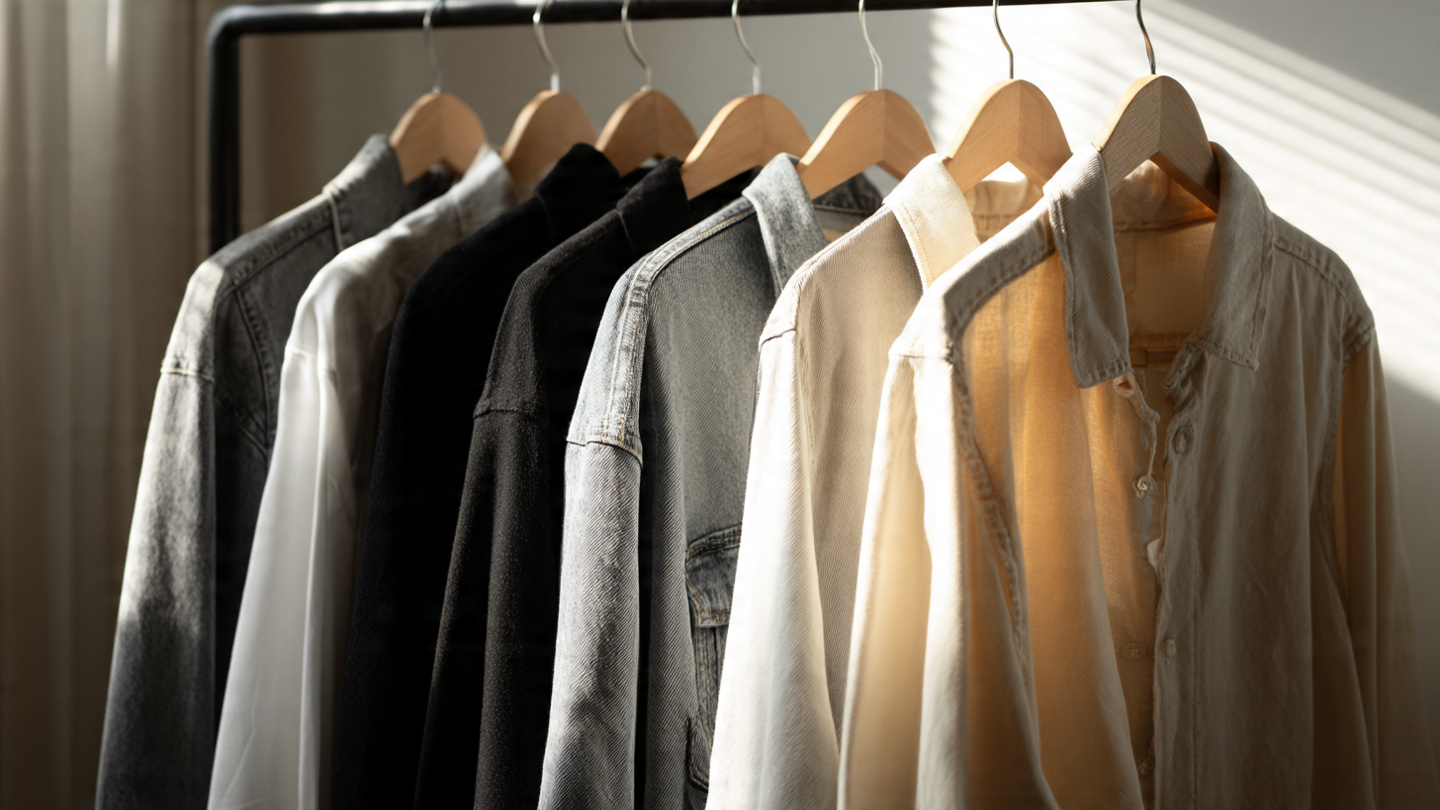
If you want the look fast, don’t overthink it. Build your base with these 90 fashion staples:
- Straight-leg or baggy jeans
- Ribbed tank or plain tee
- Oversized shirt or flannel
- Leather or denim jacket
- Slip dress (layer-friendly and timeless)
- Chunky sneakers or combat boots
- Simple accessories: small hoops, minimal chain, tiny sunglasses
The trick is balance: if the jeans are baggy, keep the top more fitted; if the top is oversized, keep the bottom cleaner.
Takeaway: The right silhouette does 80% of the 90 fashion work.
Men’s hair and accessories: Frost, spikes, and futuristic shades
Let’s pour one out for the frosted-tipped spikes—a 90s rite of passage that turned every boy band into a walking ice sculpture. Guys went bold with their hair, loading on the hair gel for gravity-defying spikes or crisp middle parts (hello, Leonardo DiCaprio era). It was all about standing out, whether you were at the skate park or just chilling with a Walkman.
Accessories? Enter the shiny, wraparound shades—think Oakley or Gargoyles—looking straight out of The Matrix or your local rollerblading crew. Add in a slap bracelet or wallet chain, and you basically nailed the 90s male accessory starter pack.
High fashion goes grunge (and yes, chaos followed)
So, how did high fashion designers get in on the whole grunge vibe? Imagine this: one day you’re at a Pearl Jam show in Seattle—flannel, thrashed jeans, boots, maybe a coffee—you blink and suddenly those same flannels and boots are stomping down a glitzy runway in New York or Paris. Wild, but true.
Designers spotted what was happening in the mosh pit and said, “What if we remix this thrift-store rebellion and put it on the catwalk?” Next thing you know, models are layered in intentionally rumpled flannel shirts over luxe slip dresses, wearing worn-in sneakers with high-end mini skirts, or tossing a beanie over immaculate hair. Labels like Perry Ellis, Anna Sui, and Ralph Lauren all dove into distressed denim, chopped-off plaid, and band tee layering—proving that attitude could be couture.
It wasn’t about pretending to be a rockstar; it was a fashion revolution where messy was the message. Suddenly, grunge didn’t just belong to teenagers loading up on Goodwill finds—it was front-row fashion. And honestly? It looked as effortless (and comfortable) as a late-night jam session.
Takeaway: When luxury designers embraced grunge, they made anti-glam cool—and proved washed-out flannels could start a wardrobe revolution.
The fashion icons behind the 90s look
Who made 90s fashion such a trip? Think of it as an all-star lineup, with designers from every country bringing their own signature energy (and the occasional runway feud). This was the decade where classic houses collided with rebellious newcomers, and every fashion tribe had its MVPs.
Spotlights on the era’s biggest style-makers:
- Gianni Versace and Dolce & Gabbana—with drama, prints, and unapologetic glam.
- Prada and Calvin Klein—masters of minimalism, clean lines, and “I woke up like this” polish.
- Marc Jacobs (hello, grunge for Perry Ellis) and Anna Sui—who basically handed out permission slips for mixing high and low.
- Alexander McQueen, John Galliano, and Vivienne Westwood—pushing boundaries, smashing traditions, and making every show a headline.
- Tom Ford at Gucci, Karl Lagerfeld at Chanel, Yves Saint Laurent—serving up reinventions of classic luxury.
- Street style legends like Ralph Lauren, Donna Karan, and Jean Paul Gaultier.
And let’s not forget trendsetters like Rei Kawakubo, Yohji Yamamoto, Martin Margiela, Dries Van Noten, and Issey Miyake—who all showed that you could build a look (and a brand) around attitude, architecture, or just a perfectly draped piece of fabric.
There was no single “top” designer of the 90s. Instead, there was a wild roster of creative minds rewriting the rules—and making sure whatever tribe you ran with, you had an icon to copy or rebel against.
This is why 90 fashion keeps coming back: there’s a version of it for basically every personality type (even the “I don’t care” personality, which ironically cares a lot).
Takeaway: The 90s didn’t have a trend—it had a whole wardrobe multiverse.
Nineties fashion trends (that still slap today)
Now for the part everyone loves: nineties fashion trends that aged like fine wine (and a few that aged like… milk left in the sun).
The “still looks great” list:
- Relaxed denim + fitted basics
- Layering (tee under slip dress, hoodie under jacket)
- Neutral/minimal outfits with strong fit
- Statement outerwear (leather, denim, varsity)
- Chunky shoes anchoring simple looks
The “use with caution” list:
- Ultra-tiny sunglasses (cool, but useless—like some group project members)
- Too many logos at once (unless that’s your intentional vibe)
- Extremely low-rise styling (choose peace, not chaos)
Takeaway: Nineties fashion trends work best when you keep the outfit clean and let one piece talk.
How to style 1990 s fashion in 2025 (without looking like a meme)
Here’s the cheat code to modernizing 1990 s fashion:
- Keep colors grounded: black, white, grey, navy, denim, beige.
- Add one “90s signal”: flannel, slip dress, chunky sneakers, leather jacket.
- Prioritize fit and fabric weight: tees should drape, denim should hold shape.
- Keep hair/accessories simple: the outfit is the main character.
Try these plug-and-play outfits:
- Baggy jeans + fitted tank + chunky sneakers
- Slip dress + white tee + combat boots
- Straight jeans + graphic tee + leather jacket
- Relaxed trousers + clean shirt + minimalist loafers
Takeaway: 1990s fashion looks best when it feels effortless—even if you planned it like a heist.
FAQ: 1990s fashion and 1990 style
Q1. What defines 1990s fashion?
1990s fashion is known for relaxed denim, simple basics, layering, and subculture-driven looks like grunge, minimalist chic, streetwear, and preppy styles—often with an “effortless” attitude.
Q2. What are the biggest nineties fashion trends that still work today?
Some of the most wearable nineties fashion trends include straight-leg or baggy jeans, slip dresses, leather/denim jackets, clean tanks and tees, flannels, and chunky sneakers or boots.
Q3. How do you wear 1990 style without looking outdated?
Wear one or two 1990 style elements (like baggy jeans or a slip dress) and balance them with modern fit, neutral colors, and cleaner styling so it feels inspired—not costume.
Q4. What are easy 90 fashion outfits for beginners?
Start with (1) straight jeans + fitted tank + chunky sneakers, (2) slip dress + white tee + boots, or (3) graphic tee + denim + leather jacket—simple, iconic, and repeatable.
Q5. Is there a difference between “90 fashion” and “1990s fashion”?
They’re usually used interchangeably, but “90 fashion” is more casual slang, while “1990s fashion” is the clearer, more search-friendly term.

