

Let’s be real—your current haircut probably screams “I Googled ‘cool haircut’ at 2 a.m. while eating cold pizza.” Meanwhile, guys with old money haircuts look like they just stepped out of a black-and-white film where everyone speaks in complete sentences and knows which fork to use. Cue dramatic pause. What if I told you the secret isn’t generational wealth—it’s scissors? And maybe a tiny bit of pomade. You feel me?
Hot take coming in 3…2…1… An old money haircut isn’t about looking rich. It’s about looking like you’ve never had to try to look rich. And yes, this distinction matters more than your barber’s Instagram follower count.
💰 Wait—What Is an “Old Money” Haircut Anyway? (No, It’s Not Just Gray Hair)

Before we dive into styles, let’s clear up the confusion swirling around this aesthetic faster than a trust fund kid avoiding student loans.
An old money haircut embodies precision scissor work, clean lines, and a natural-looking taper—not buzz cuts that could double as lawnmower attachments [[65]]. Think JFK’s side part, not Travis Scott’s neon mohawk. The vibe? Understated elegance that whispers “my family summered in the Hamptons before electricity” rather than shouting “I bought a Rolex after my first crypto trade.”
Key characteristics that separate old money hair from basic haircuts:
- ✅ Gradual tapering (sides blend softly—not abruptly shaved)
- ✅ Medium length on top (enough to style, not enough to require three products)
- ✅ Soft volume (not helmet hair, not greasy strands)
- ✅ Natural finish (zero crunch, zero glitter, zero “product regret”)
- ✅ Timeless structure (wouldn’t look out of place in 1955 or 2025)
Let’s be real—your barber suggesting a “skin fade with line-up” is the aesthetic equivalent of wearing socks with sandals to a yacht party. We can do better.
👔 The Gentlemen’s Collection: 5 Old Money Haircuts That Won’t Make You Look Like a Time Traveler
1. The Ivy League (AKA “The Harvard Clip”)
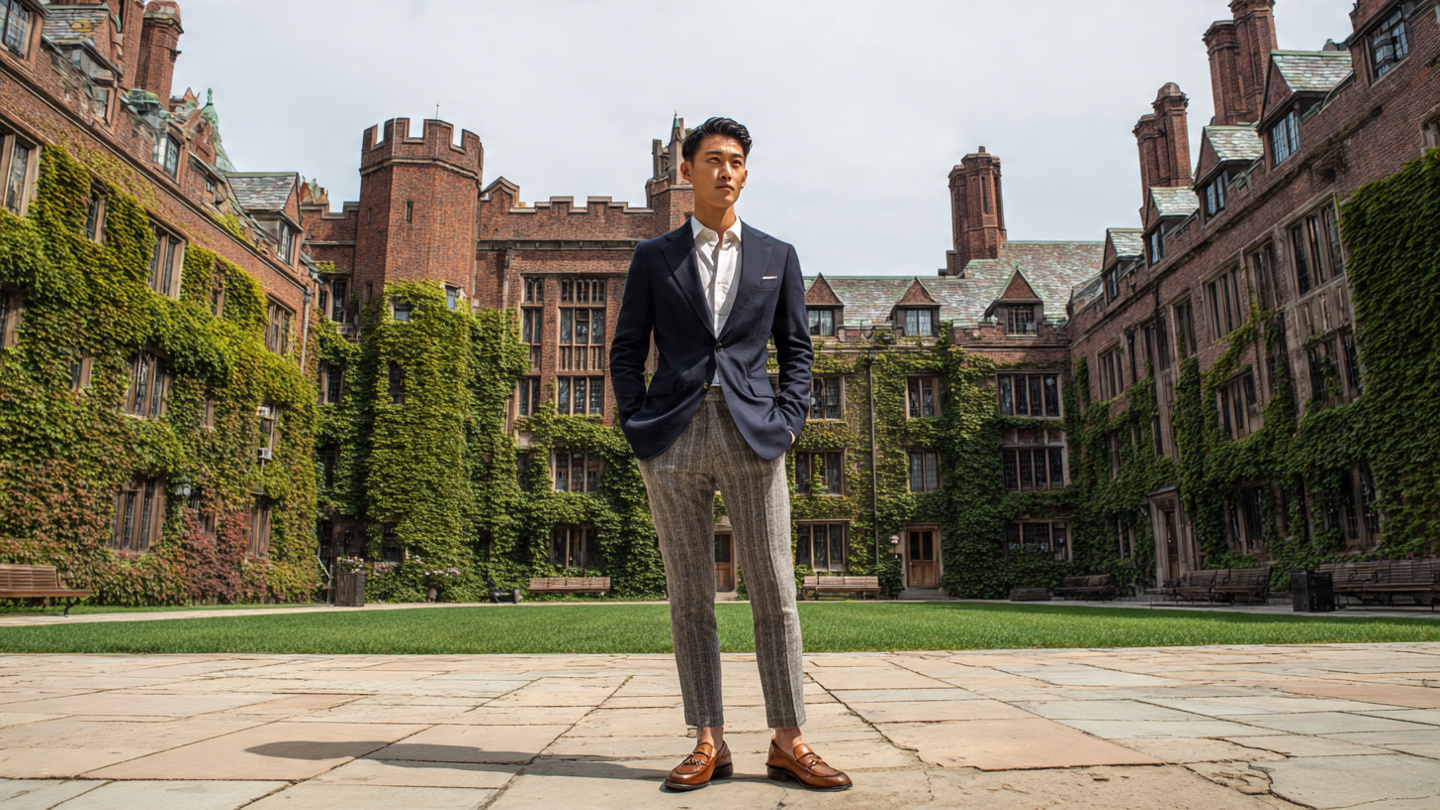
This isn’t just a haircut—it’s a personality trait. The Ivy League blends a crew cut’s neatness with a side part’s sophistication [[83]]. You get short, tidy sides with 1.5–2 inches on top—just enough length to sweep elegantly without requiring a hairstylist on retainer [[85]].
Pro move: Ask your barber for “scissor-over-comb on the sides” to avoid that harsh fade line. Your future self (and future dates) will thank you.
2. The Classic Taper (The OG Quiet Luxury)
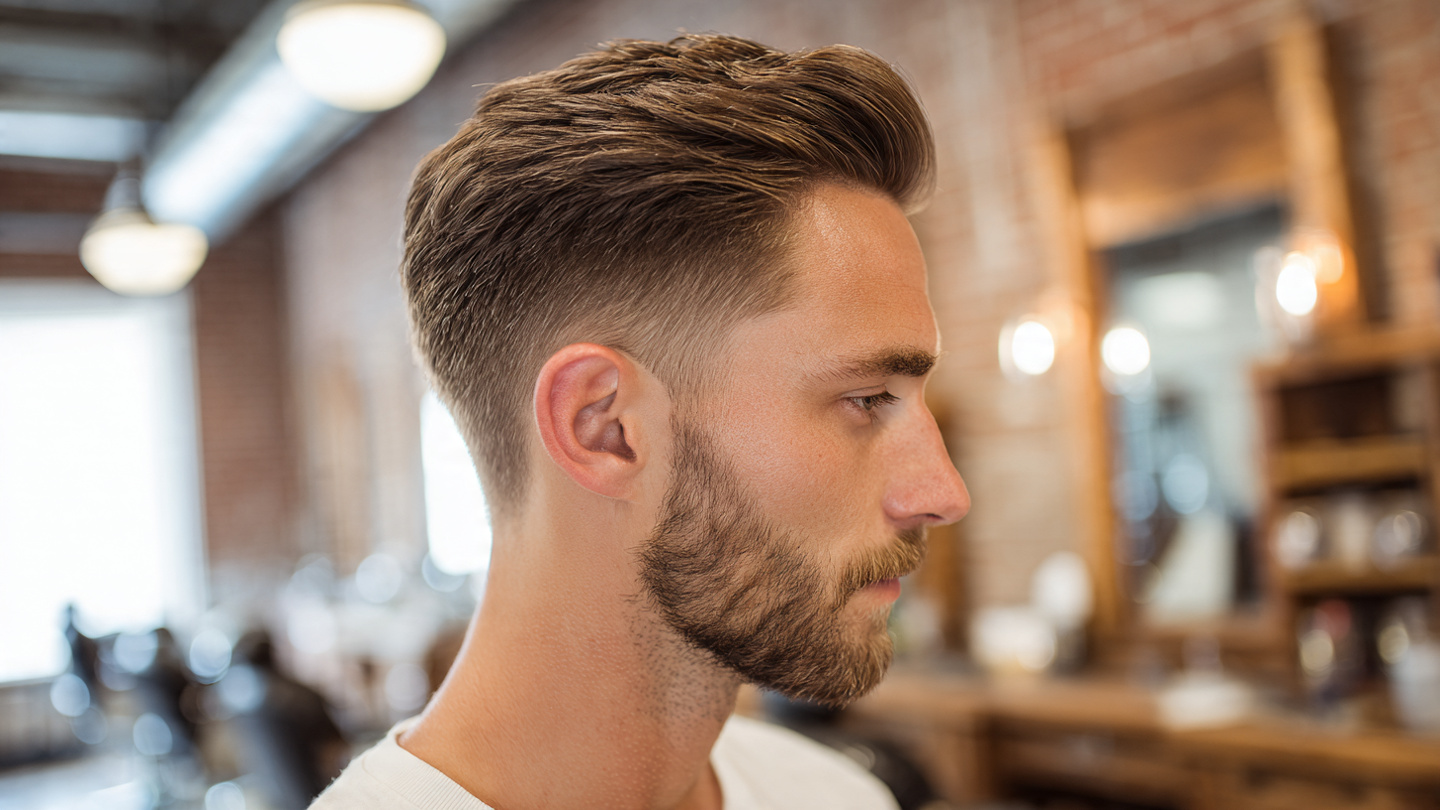
This is the haircut equivalent of a perfectly tailored navy blazer—never wrong, always appropriate. A true classic taper features gradual shortening from crown to neckline using precision scissor work, not clippers screaming at full volume [[65]]. The result? A clean, masculine shape that enhances your jawline without announcing itself [[92]].
Barber script: “I want a classic taper—not a fade. Soft blend, natural finish. And for the love of God, no hard parts.”
3. The Side Part (The Brooks Brothers Special)
Arguably the most versatile old money style, the side part works whether you’re closing deals or closing a bottle of Bordeaux [[58]]. The magic happens at the part line—clean but not surgical, with soft volume on top that moves when you walk (not when the wind blows).
Style hack: Blow-dry hair against your natural part first, then switch direction. This creates memory in the hair so your part stays put longer than your New Year’s resolutions.
4. The Brush-Back (Effortless ≠ Effortless)
Don’t confuse this with a slick-back (more on that in a sec). The brush-back features medium-length hair swept backward with soft texture—not glued-down helmet hair [[45]]. Think Paul Newman in Cool Hand Luke, not a mobster testifying before Congress.
Product pairing: Lightweight pomade or cream—never gel. If your hair makes a crack sound when you touch it, you’ve failed the old money exam.
5. The French Crop (For Guys Who Hate Maintenance)
Short sides, slightly longer top, blunt fringe—this cut screams “I have my life together” while requiring approximately zero styling time [[12]]. It’s the haircut version of a perfectly pressed Oxford shirt: structured but not stiff.
👩 The Ladies’ Lounge: Old Money Hair That Says “Trust Fund” Without the Trust Fund
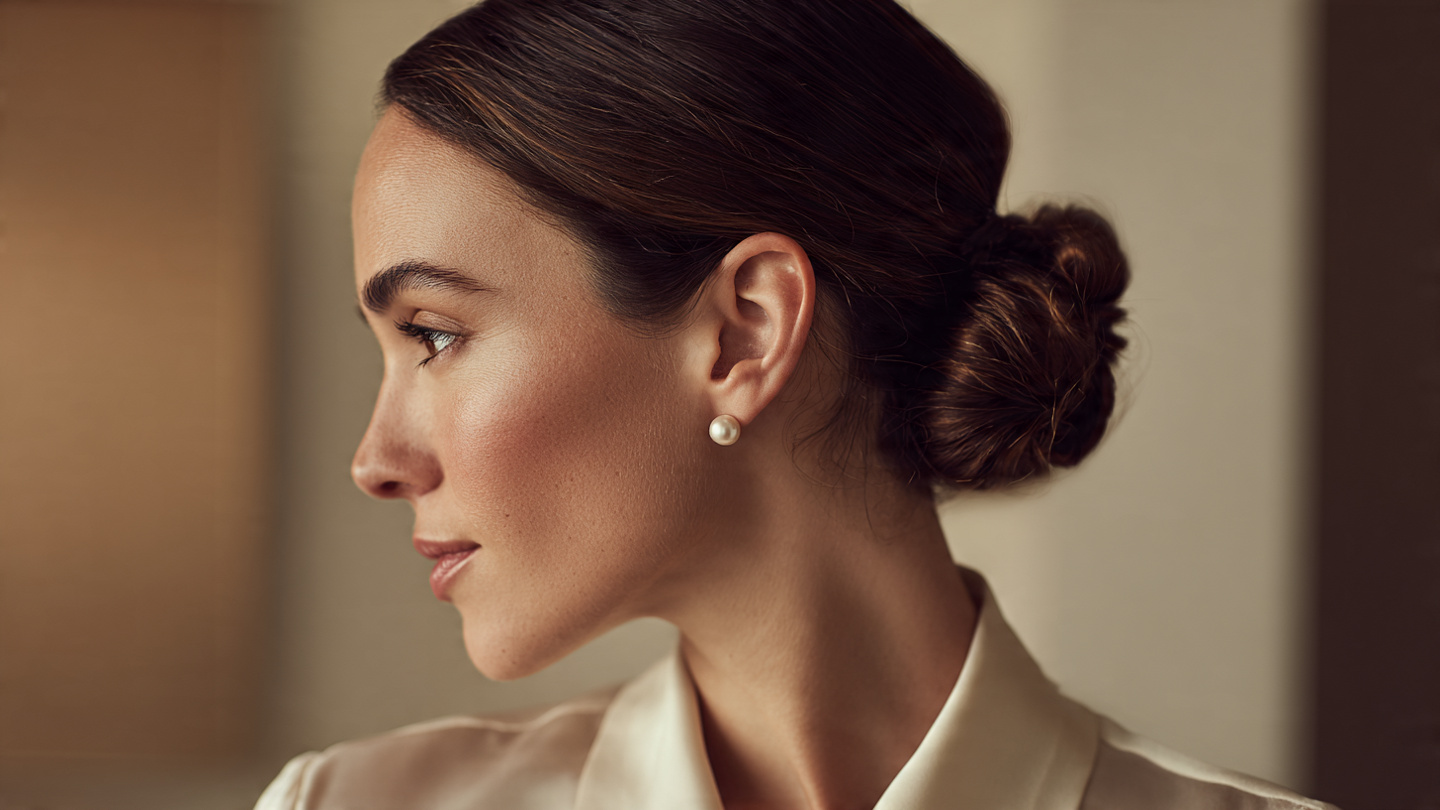
Ladies, I see you. While men get all the “side part” hype, your old money hair game runs on polished simplicity—not 45-minute heat styling sessions [[60]].
Top styles that pass the country club test:
- The Polished Blowout: Sleek, shiny, zero flyaways. Bonus points if it looks like you just woke up this glossy [[38]].
- The Shoulder-Length Soft Bob: Not the choppy, Instagram-baddie bob. We’re talking Anastasia vibes—soft layers, gentle movement, ends that flick like they’ve never seen a flat iron [[67]].
- The Low Chignon: A bun so elegant it should come with a butler. Key: smooth crown, zero baby hairs escaping like they’re fleeing a bad date [[38]].
- Brushed-Out Waves: Not beach waves (too try-hard). Think Breakfast at Tiffany’s—soft, face-framing bends that suggest you own pearls but don’t need to wear them daily [[60]].
Pro tip: Old money hair color leans natural—your shade, just healthier. No platinum streaks, no pastel experiments. If your roots grow out and still look intentional? You’ve won.
🚫 Old Money Hair vs. New Money Hair: The Telltale Signs You’re Faking It
Let’s play a game called “Spot the Imposter”:
| Old Money Hair | New Money Hair |
|---|---|
| Soft taper blend | Skin fade with razor lines |
| Natural shine | High-gloss gel helmet |
| Medium length | Extreme undercuts |
| Scissor-cut texture | Clipper-cut uniformity |
| “I woke up like this” | “I spent 45 minutes on this” |
If your haircut requires explaining—or comes with its own hashtag—you’ve missed the point entirely. Old money aesthetics thrive on quiet confidence, not loud declarations [[78]].
✂️ How to Talk to Your Barber Without Sounding Like a TikTok Comment Section
Walk into any barbershop saying “I want that Timothée Chalamet old money haircut” and watch your barber’s soul leave their body [[59]]. Instead, arm yourself with these precise requests:
✅ DO say:
- “Classic taper with scissor work on the sides”
- “Medium length on top—enough to style with a side part”
- “Soft blend, no hard lines”
- “Natural finish—I don’t want it to look ‘done'”
❌ DON’T say:
- “Make me look rich” (barbers aren’t magicians)
- “Just do whatever” (you’ll leave looking like your barber’s ex)
- “I want a fade” (unless you specify low taper fade—big difference)
Bring reference photos—but choose images with good lighting. That moody, filtered Instagram pic? Your barber can’t see the actual haircut through the VSCO haze.
💡 The Real Secret Nobody Tells You (Spoiler: It’s Not the Cut)
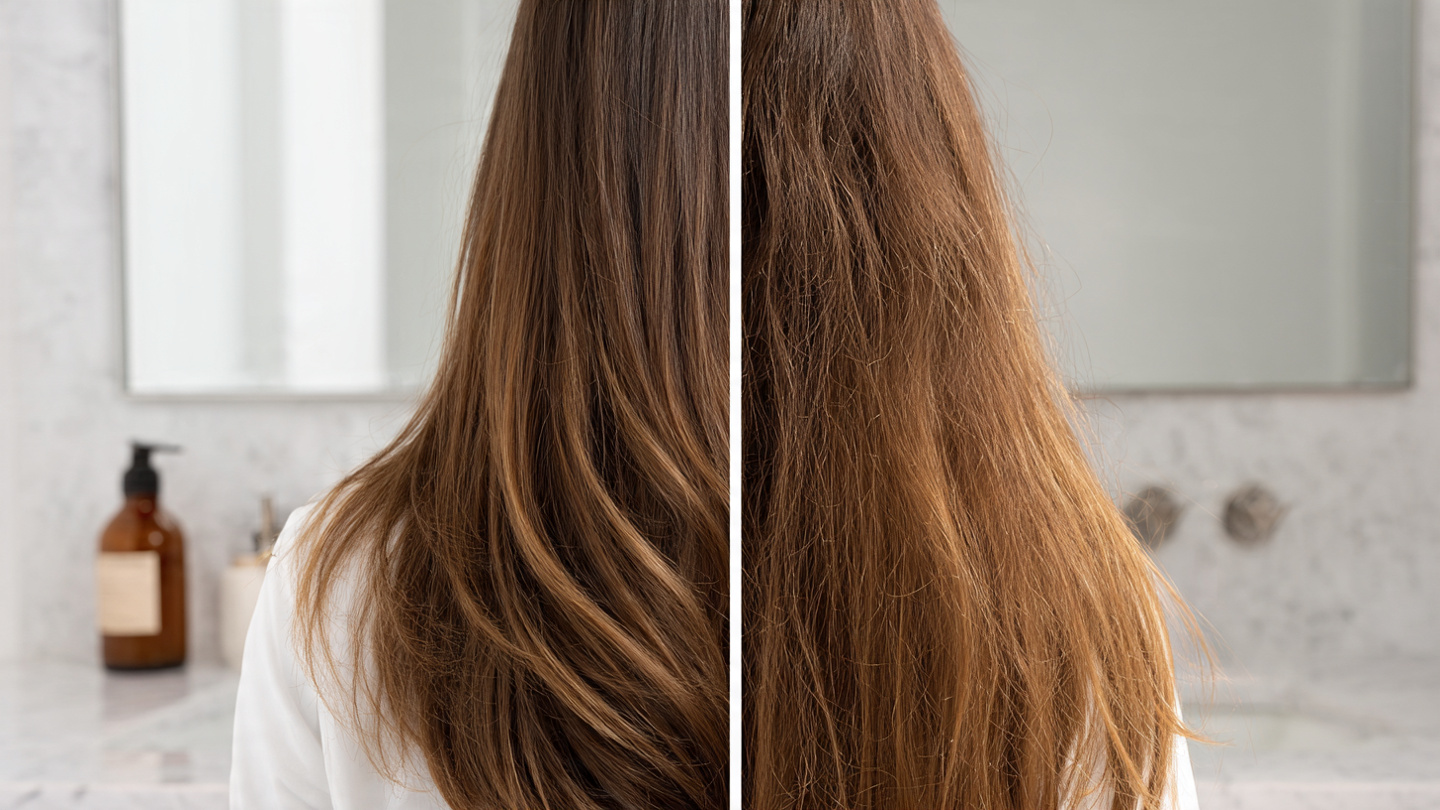
Here’s the tea: An old money haircut only works on healthy hair. No amount of precision tapering can save strands that look like they survived a wildfire. The wealthy aesthetic relies on density and shine—things no $300 haircut can fake if your hair’s fried from heat damage [[14]].
Your move:
- Trim split ends every 8–10 weeks (prevents that “I forgot I had hair” look)
- Use a sulfate-free shampoo (preserves natural oils = natural shine)
- Blow-dry with a round brush (adds volume without product overload)
- Sleep on a silk pillowcase (reduces frizz—yes, really)
🎓 Final Lesson Before the Bell Rings
An old money haircut isn’t about mimicking wealth—it’s about embracing timelessness over trends. While TikTok hairstyles rotate faster than dating apps, these cuts endure because they flatter bone structure, not algorithms [[68]].
So next time you’re tempted by that “wolf cut” your cousin’s roommate’s TikTok made famous… pause. Ask yourself: “Will this look dignified when I’m 60?” If the answer’s no, book the classic taper instead.
And yes—this will be on the test. The test being: Do strangers assume you come from money, or do they ask if you’re “in a band”? Choose wisely.
Class dismissed. Now go get a haircut that doesn’t require a tutorial video to maintain. ✂️
❓ FAQ Section
What is an old money haircut?
An old money haircut refers to a timeless men’s hairstyle characterized by precision scissor work, soft tapering, medium length on top, and a natural finish. Unlike modern fades, these classic cuts emphasize understated elegance—think JFK’s side part or Paul Newman’s brush-back. The goal is looking polished without appearing overly styled.
What is the most classic men’s haircut?
The Ivy League haircut is widely considered the most classic men’s haircut. It features short, tapered sides with 1.5–2 inches of length on top, allowing for versatile styling like a side part or brush-back. Its clean lines and moderate length make it appropriate for any occasion—from boardrooms to weddings—without looking dated or trendy.
How do I ask my barber for an old money cut?
When requesting an old money haircut, be specific: “I want a classic taper with scissor work on the sides, medium length on top for styling, and a soft blend—no hard lines or skin fade.” Bring a reference photo with good lighting, and avoid vague terms like “make me look rich” or “do a fade.” Clear communication prevents barber confusion and ensures you leave with a timeless men’s hairstyle.
Can I pull off an old money haircut with thin hair?
Absolutely—old money haircuts can actually work better with thin hair when executed properly. Keep the top at 1.5–2 inches to create volume illusion, use matte products that add texture without weighing hair down, and avoid extreme tapers that highlight sparse areas. The Ivy League haircut and classic taper are particularly flattering for fine hair because they rely on precision over density.
What’s the best matte product for a side part?
For a natural-looking side part, Hanz de Fuko Claymation or Baxter of California Clay Pomade are top-tier choices. Both provide flexible, medium hold with zero shine and wash out easily. Budget-friendly option: Suavecito Matte Pomade. For thin hair specifically, try Bumble and Bumble Sumotech—it adds grit and volume without flattening strands.
What’s the difference between a side part and a middle part?
A side part for men creates asymmetry that enhances facial structure and adds sophistication—ideal for oval, square, or rectangular face shapes. A middle part divides hair evenly down the center, offering a more relaxed, modern look but potentially emphasizing round face shapes. For old money aesthetics, the side part is the undisputed champion of timeless men’s hairstyles.
How often should I get an old money haircut trimmed?
For maintaining a classic men’s haircut, schedule trims every 4–6 weeks. This keeps the taper clean, prevents the top from becoming unruly, and maintains the sharp lines that define timeless styling. If you have faster-growing hair or prefer a tighter taper, lean toward the 4-week mark. Slow growers can stretch to 6 weeks without losing shape.
Are old money haircuts suitable for all face shapes?
Yes—with adjustments. Oval faces can pull off virtually any old money haircut. Round faces benefit from height on top (Ivy League or brush-back) to elongate. Square faces look great with side parts that soften angularity. Long faces should avoid excessive height—opt for a classic taper with moderate top length. Always consult your barber about which timeless men’s hairstyle complements your bone structure best.
What’s the difference between a taper and a fade?
A taper gradually shortens hair from top to bottom using subtle blending—classic, professional, and timeless. A fade involves a more dramatic transition, often down to the skin, with sharper contrast. For old money aesthetics, choose a low or mid taper over a high fade. The softer blend looks more refined and ages better across decades.
How do I style my old money haircut at home?
Start with damp (not soaking) hair. Blow-dry with a round brush for volume, then apply a dime-sized amount of matte pomade warmed between palms. For a side part, comb forward first, establish your part line, then sweep hair into place. Finish with a light comb-through—avoid over-styling. Remember: old money hair should look intentional but effortless, not helmet-like.

